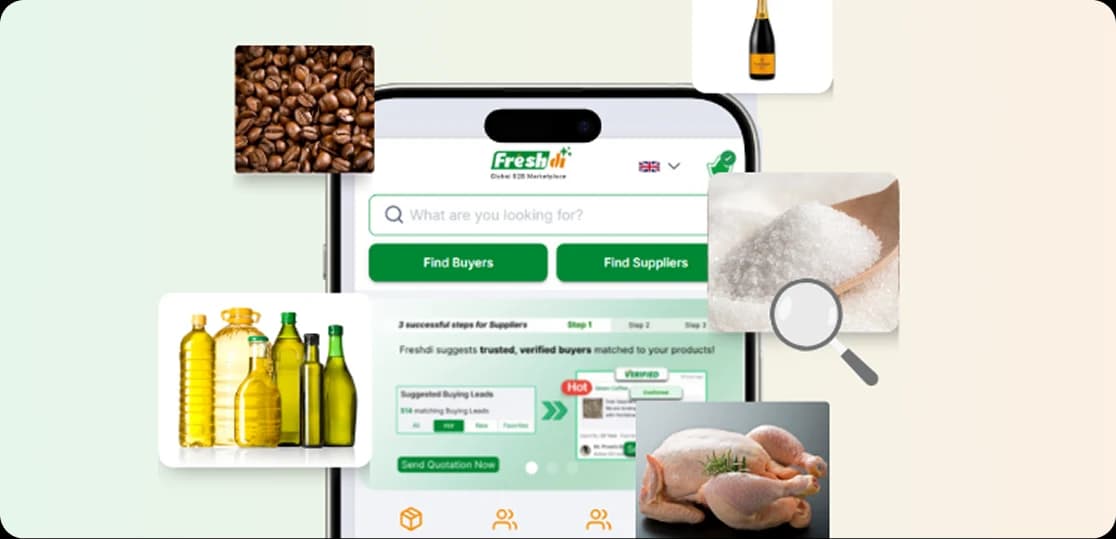
876 results for “Juicers products found from trusted suppliers, wholesalers, manufacturers & exporters”








Frequently Asked Questions (FAQs)
Who are the world's leading juicer exporters and top global suppliers in the B2B market?
China, the United States, and Germany are the top global juicer exporters, with China dominating the wholesale market due to its large-scale production and export capacity. The U.S. leads in high-end, commercial-grade juicers, while Germany offers premium, eco-friendly models. These countries serve as key suppliers for global buyers seeking reliable, bulk juicer exports. Freshdi.com is a trusted B2B platform connecting buyers with top-tier juicer manufacturers and distributors worldwide.
How do I buy wholesale juicers on B2B marketplaces?
To source bulk juicers efficiently, identify verified manufacturers with ISO 9001 and CE certifications, ensuring product quality and import compliance. Start by submitting a detailed RFQ specifying juicer type (e.g., centrifugal, cold-press), capacity, and required features like motor power and blade material. Negotiate terms including FOB shipping, Trade Assurance, or Letters of Credit for secure payment. Verify supplier credentials and check for compliance with food safety and export regulations. For large volumes, prioritize suppliers offering competitive bulk pricing and reliable logistics. Consider platforms like Freshdi.com for direct access to vetted, scalable juicer manufacturers.
How do I find and verify reliable suppliers for juicers?
To find reliable juicer suppliers, use trusted B2B platforms like Alibaba, Global Sources, and Freshdi.com to access direct manufacturers. Prioritize suppliers with ISO 9001, CE, and RoHS certifications to ensure quality and compliance. Check key attributes such as blade durability, motor power, and juice extraction efficiency. Verify reputation through customer reviews, factory audits, and sample testing. Always request product samples and confirm export history. Secure transactions via Letters of Credit or Trade Assurance for wholesale safety. Ensure clear MOQs, lead times, and packaging standards are defined before finalizing sourcing agreements.
What is the typical Minimum Order Quantity (MOQ) for wholesale juicers?
The standard MOQ for wholesale juicers is 500 units for commercial orders, enabling manufacturers to optimize production run efficiency and reduce per-unit costs. Bulk suppliers often require this minimum to cover tooling, packaging, and shipping logistics. Smaller distributors may offer lower MOQs (e.g., 100–200 units) for regional or retail distribution, while direct manufacturers typically require 500+ units for private label or white-label brands. Lower volumes may result in higher per-unit pricing due to reduced economies of scale and increased shipping costs.
You may like
You may like